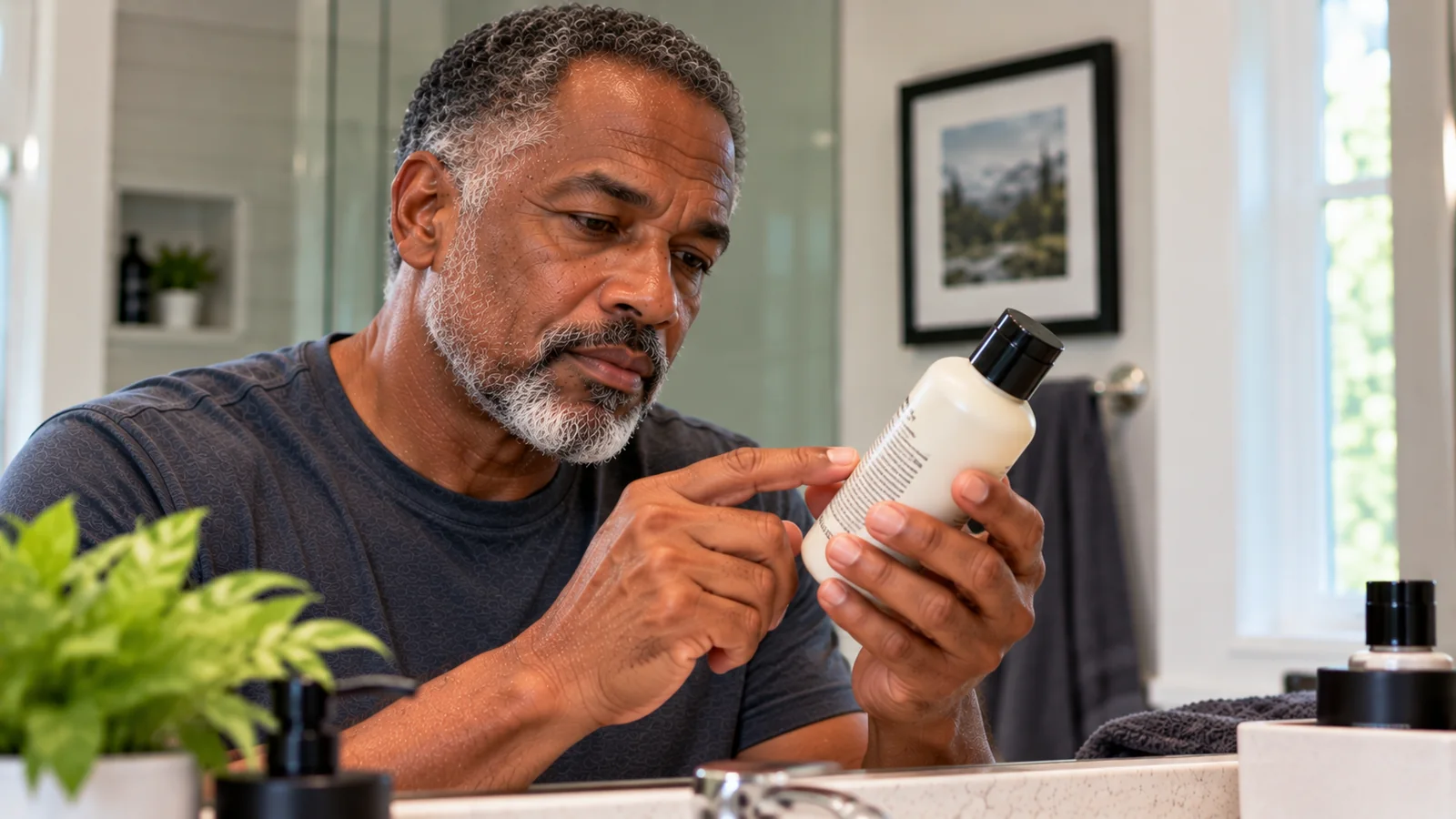
Grey Wolf Grooming / Practical guide
Fragrance-Free, Unscented, Natural: Read the Label, Not the Hype
A practical label-reading guide for men who prefer fewer fragrances or have experienced discomfort with scented grooming products.
Compare your options
| Option | What it does | Good fit | Watch out for |
|---|---|---|---|
| Fragrance-free | Generally signals no added fragrance | Those avoiding added scent | Read the full label; not a zero-risk guarantee |
| Unscented | May have little detectable odor | People who dislike strong smells | May include masking fragrance |
| Essential-oil scented | Uses botanical scent components | People who enjoy those scents | Natural origin does not prevent sensitivity |
| Sensitive-skin claim | Broad marketing descriptor | Initial shortlist only | Not proof of compatibility |
Know the difference between fragrance-free and unscented
Fragrance-free usually indicates a product was made without added fragrance, whereas unscented may mean the finished product has little noticeable odor, potentially using masking ingredients. Label practices and formulations vary. If avoiding fragrance is important, inspect the ingredient list and manufacturer information instead of relying on one word.
Read the actual ingredient panel
Look for terms such as fragrance or parfum, and recognize that some essential oils are used for scent. Ingredient lists may be long; length alone is not evidence of danger. Focus on ingredients you already know you wish to avoid. When a claim and label appear inconsistent, consult the manufacturer rather than assuming either one is definitive.
Keep the routine small
Use one cleanser and one moisturizer if needed. If you shave, select a shaving product based on performance and fragrance preference, not the promise of a complex scent profile. Introduce new products separately so you can identify a likely trigger if discomfort occurs.
The patch-test question
Trying a small amount on a limited area can be a sensible precaution for a new cosmetic product, but it cannot rule out all reactions. Follow the product’s instructions. If you have a history of significant reactions or persistent symptoms, ask a qualified professional about appropriate evaluation and testing.
Shopping examples without false assurance
Vanicream Shampoo, Vanicream Conditioner and CeraVe facial cleansers appear in research inventory, but each formula and package must be checked individually. A brand name does not guarantee every item is fragrance-free. One researched Vanicream conditioner listing is a three-pack, so do not describe it as a single bottle or link it without checking the actual offer.
For the next related decision, see face-wash selection.
Common questions
Is unscented the same as fragrance-free?
No. Unscented describes perceived smell; fragrance-free generally refers to added fragrance. Check the label.
Are essential oils automatically gentler?
No. Botanical scent ingredients can still be unsuitable for some people.
Should I throw away everything scented?
Not unless you have a reason to. Keep products that work for you and address specific discomfort or preferences.
Related guidance
For ingredient claims and label terminology, see our grooming ingredient guide. This article is general grooming information and does not replace medical assessment.