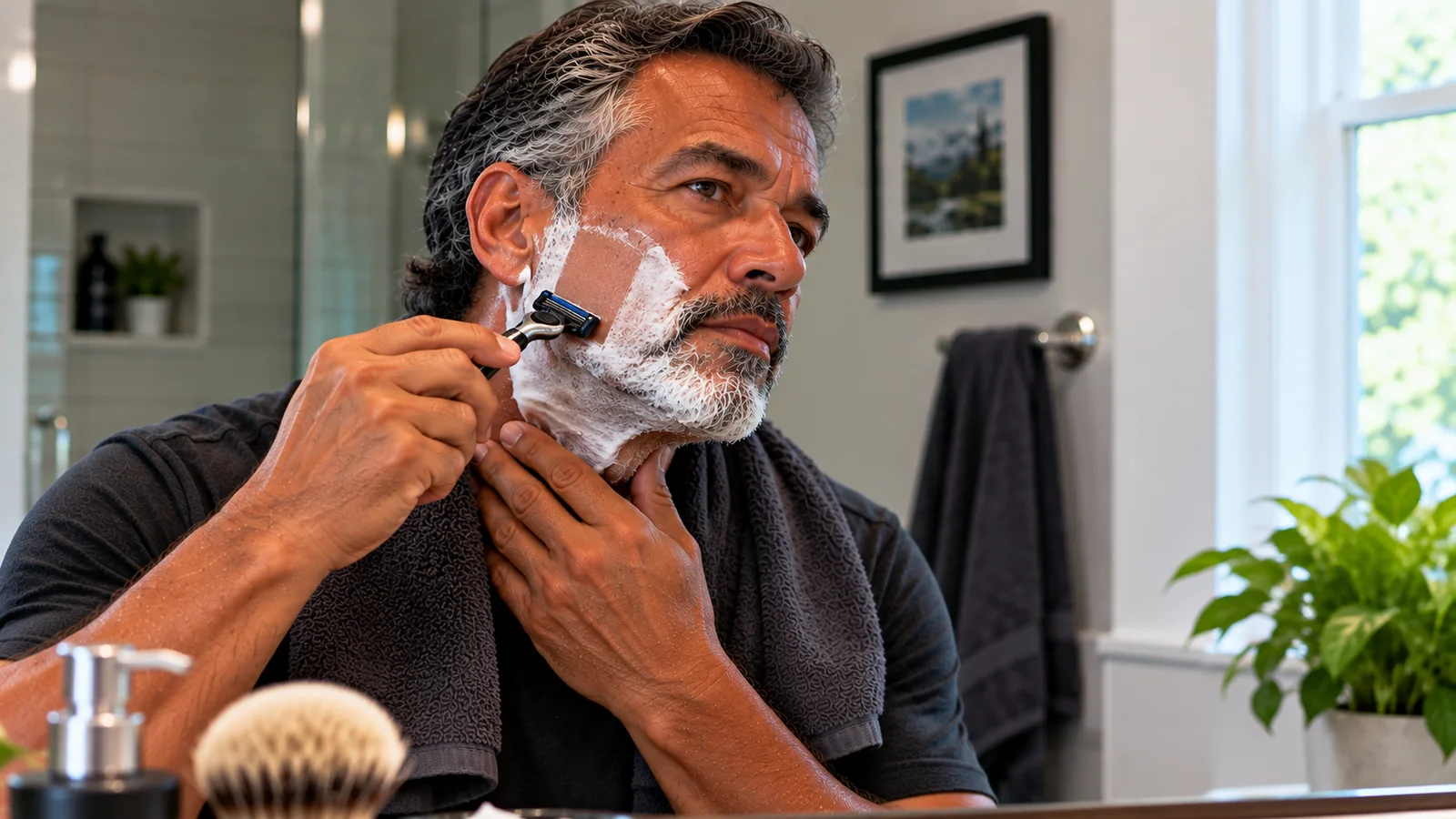
Grey Wolf Grooming / Shaving guide
A More Comfortable Face and Neck Shave Starts With Technique
A technique-first guide to shaving the face and neck more comfortably without promising a cure for persistent irritation.
Compare the options
| Option | Strength | Trade-off | Best fit |
|---|---|---|---|
| With the grain | Usually less aggressive first pass | May not feel ultra-close | Conservative daily shaving |
| Across the grain | Can produce a closer result | Adds friction and passes | Optional only if comfortable |
| Against the grain | Can be very close | May increase discomfort | Not a default requirement |
| Electric trim or shave | Different blade-to-skin contact | Closeness and feel vary | A practical alternative |
Map the direction of growth
Facial hair rarely grows in one neat downward direction. On the neck it may run sideways, upward or in swirls. Before shaving, feel the stubble gently in different directions and note where resistance increases. Treat each area according to its growth pattern rather than dragging a razor straight down everywhere.
Prepare without scrubbing
Clean the face gently and wet the beard with comfortably warm water. Apply enough shaving cream or gel to maintain glide. Aggressive exfoliation just before shaving can add friction rather than help.
Use lighter pressure and fewer passes
Make short strokes, keep the blade clean and avoid pushing down. Start with the grain. Rinse and inspect before deciding whether another pass is worthwhile. Reapply lubrication before a second pass rather than shaving repeatedly over bare skin.
Pay attention to the jaw and Adam’s apple
Contours make it tempting to stretch and scrape. Change the angle of your head gently to access the area, use controlled strokes and avoid chasing every last rough spot. A little remaining stubble may be a better result than a painful close shave.
Replace poor-performing blades
A blade that tugs can encourage extra pressure. Replace blades or heads according to performance and manufacturer guidance. Clean and store tools as directed. Do not assume more blades or a higher price guarantees a comfortable result.
Aftercare and when to seek help
Rinse thoroughly, pat dry and apply a comfortable moisturizer or balm if needed. Persistent bumps, inflammation, bleeding, infection-like symptoms or severe irritation need professional assessment; a grooming guide cannot diagnose the cause.
For the next related decision, see a simple clean-shave routine.
Frequently asked questions
Should I shave against the grain for a closer result?
Only if your skin tolerates it and you accept the added friction. It is not mandatory.
Does more shaving cream solve irritation?
Not by itself. Pressure, direction, blade condition and number of passes matter.
Is electric shaving a reasonable alternative?
Yes. It may suit your routine better; choose by comfort and maintenance, not a universal ranking.
Continue with the shaving guides
Start with the complete shaving guide. For an overview of grooming product ingredients, consult the ingredient guide. Links to companion guides may be activated during the coordinated bulk publication.