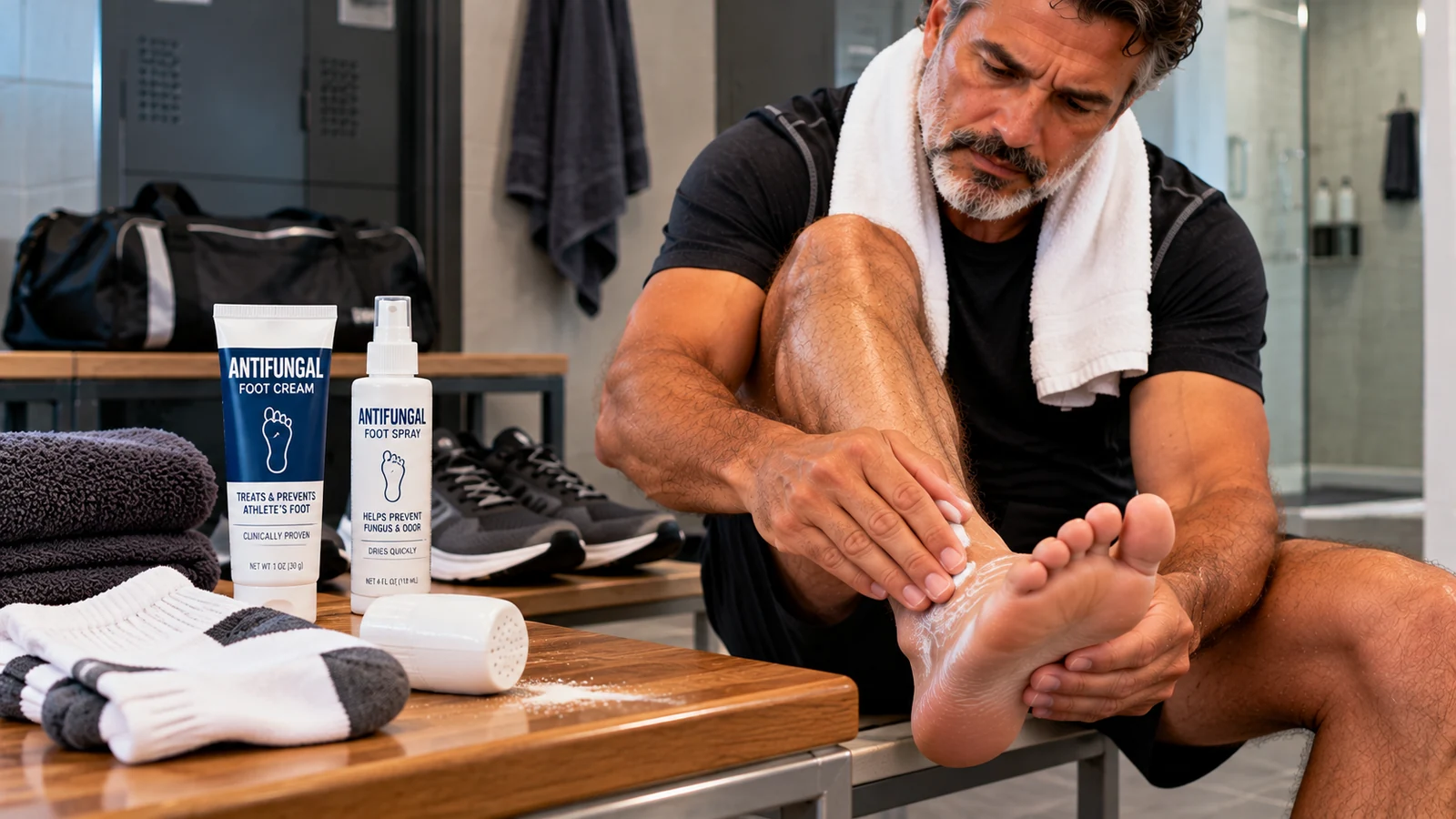
Athlete’s Foot: Prevention and Sensible Next Steps
Itchy, peeling skin can be athlete’s foot, but eczema and other conditions can look similar. Appearance alone cannot establish the diagnosis.
Moisture and label basics
Itchy, peeling skin can be athlete’s foot, but eczema and other conditions can look similar. Appearance alone cannot establish the diagnosis.
What to do in practice
Keep feet clean and dry, change damp socks, let shoes dry and wear protective footwear in shared wet areas.
Choosing products without the hype
Some OTC antifungals are labeled for athlete’s foot. Check the active ingredient, site and duration, and follow directions. Ordinary deodorants are not treatments; avoid steroid-only cream for a possible fungal rash.
When to stop and get help
Seek professional guidance for uncertain, worsening or persistent symptoms, significant pain, drainage, spreading redness or nail involvement. Diabetes or immune compromise calls for additional caution.
What the rash may look like
Fungal foot infections can produce itching, scaling, peeling and cracking, commonly between toes. However, contact irritation and eczema can look similar. A description or photograph cannot reliably confirm a cause. If the rash is atypical, widespread or recurrent, professional assessment is more useful than repeatedly changing products.
Choosing a nonprescription product
Read the Drug Facts label. Confirm that the product specifically lists athlete’s foot, check its active ingredient and instructions, and use it for the recommended duration. Products differ in how often and how long they are applied. Do not assume that a product marketed as natural, antibacterial or deodorizing is an antifungal medicine. Avoid using steroid-only cream for a possible fungal infection without medical advice.
Reduce reinfection opportunities
Dry between the toes after bathing, change socks after exercise and allow footwear to dry before wearing it again. In shared showers or locker rooms, protective sandals can reduce exposure. Keep towels personal and wash them routinely. If nails are also thick or discolored, discuss that separately: fungal nail problems are harder to address than ordinary skin infection.
When self-care is the wrong bet
If you have diabetes, impaired circulation, a weakened immune system or an open wound, get individualized advice. Seek prompt care for spreading redness, marked swelling, drainage, fever or significant pain. A rash that fails to improve with appropriate labeled care needs reassessment, not an endless succession of creams.
For the next related decision, see groin hygiene.
Frequently asked questions
Can I use deodorant instead of antifungal cream?
No. A deodorant addresses odor, not a fungal infection.