Grey Wolf Grooming / Practical guide
Grooming Scissors: Precision Without Overcutting
A grooming-scissors buying and use guide for controlled detail work.
At-a-glance decision guide
| Question | Practical answer |
|---|---|
| What is the goal? | Comfortable, repeatable grooming |
| What matters most? | Fit, technique, maintenance and price |
| What can wait? | Optional accessories and upgrades without a clear use |
Choose the right size
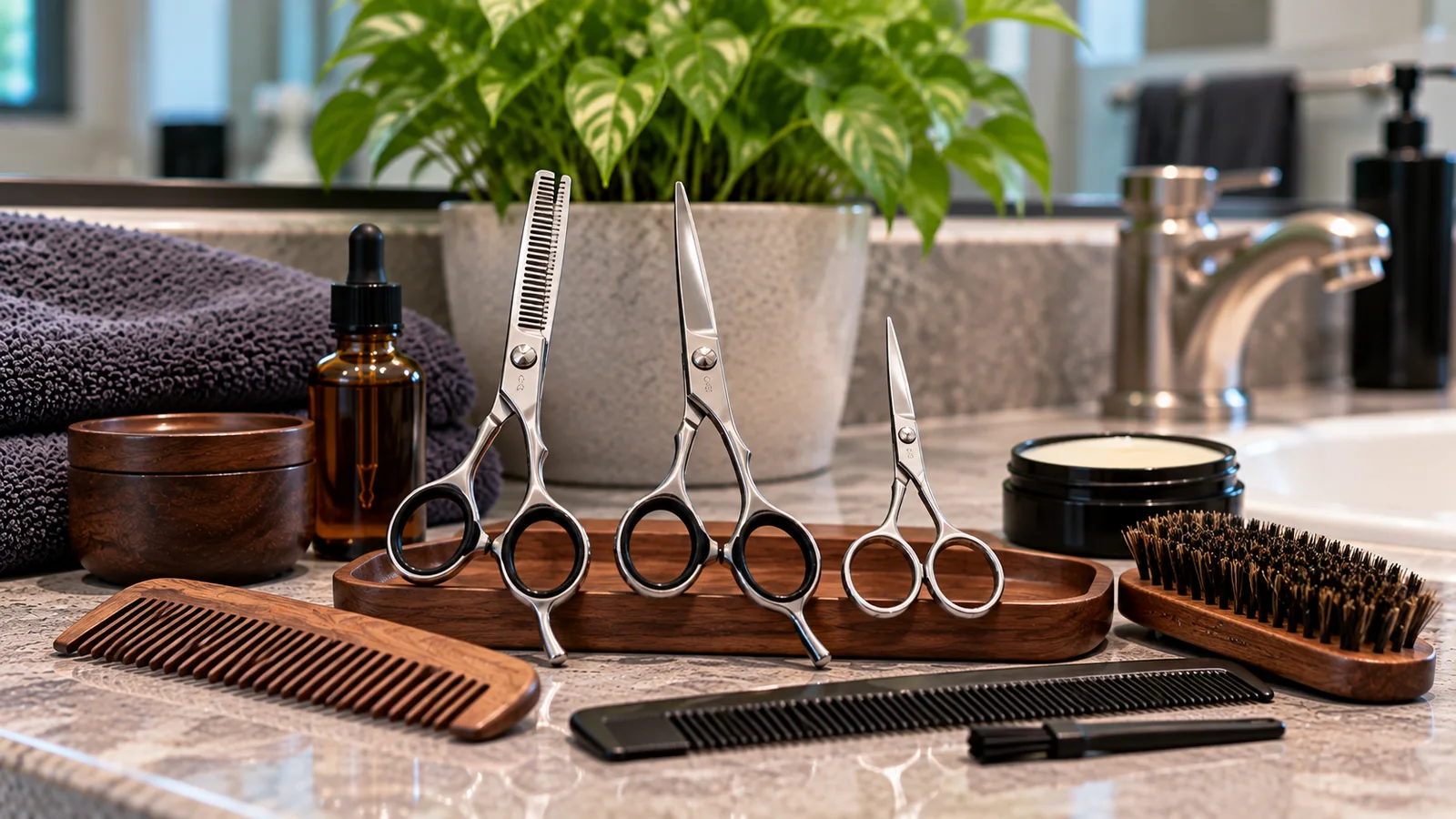
Small sharp scissors are useful for mustache hairs and beard strays. Longer haircutting shears suit broader sections; thinning shears are specialized.
Check blade quality and grip
Look for clean blade alignment, smooth hinge movement, comfortable rings and a tip suitable for the job.
Trim small amounts
Comb dry hair into its normal position, use good lighting and take off only a little at a time. Keep blades away from skin and eyes.
Know when a trimmer is better
Scissors handle isolated hairs; a guarded trimmer is usually faster for maintaining even beard length.
Clean and store safely
Remove loose hair, wipe as directed and store closed in a protective case. Do not use grooming scissors for packaging.
For the next related decision, see mustache grooming.
Common questions
Are curved blades required?
No. Straight short blades can work well.
Are rounded tips harmless?
No. They still require careful handling.
See the grooming tools hub and shaving guide for related decisions.