Grey Wolf Grooming / Practical guide
How to Style Thinning Hair Without Fighting It
A straightforward approach to cutting and styling thinning hair without miracle-growth promises or complicated routines.
Work with the hair you have
Thinning hair is a styling constraint, not a personal failure. The most useful changes are often a cleaner haircut, less product and a style that does not require long strands to disguise sparse areas. There is no obligation to cover a hairline or chase a younger appearance.
Choose a cut that behaves
Shorter, textured cuts can reduce the contrast between dense and sparse areas. Very long comb-overs tend to separate during the day. A barber can help choose a length that suits the actual growth pattern and how much maintenance you want.
Product and finish guide
| Product type | Typical finish | Watch out for |
|---|---|---|
| Matte paste or clay | Texture, less shine | Too much creates clumps |
| Light cream | Flexible control | Heavy formulas can flatten hair |
| Gel | Stronger hold | Wet-looking separation |
| Oil or glossy pomade | Shine and definition | May expose scalp more visibly |
A five-minute routine
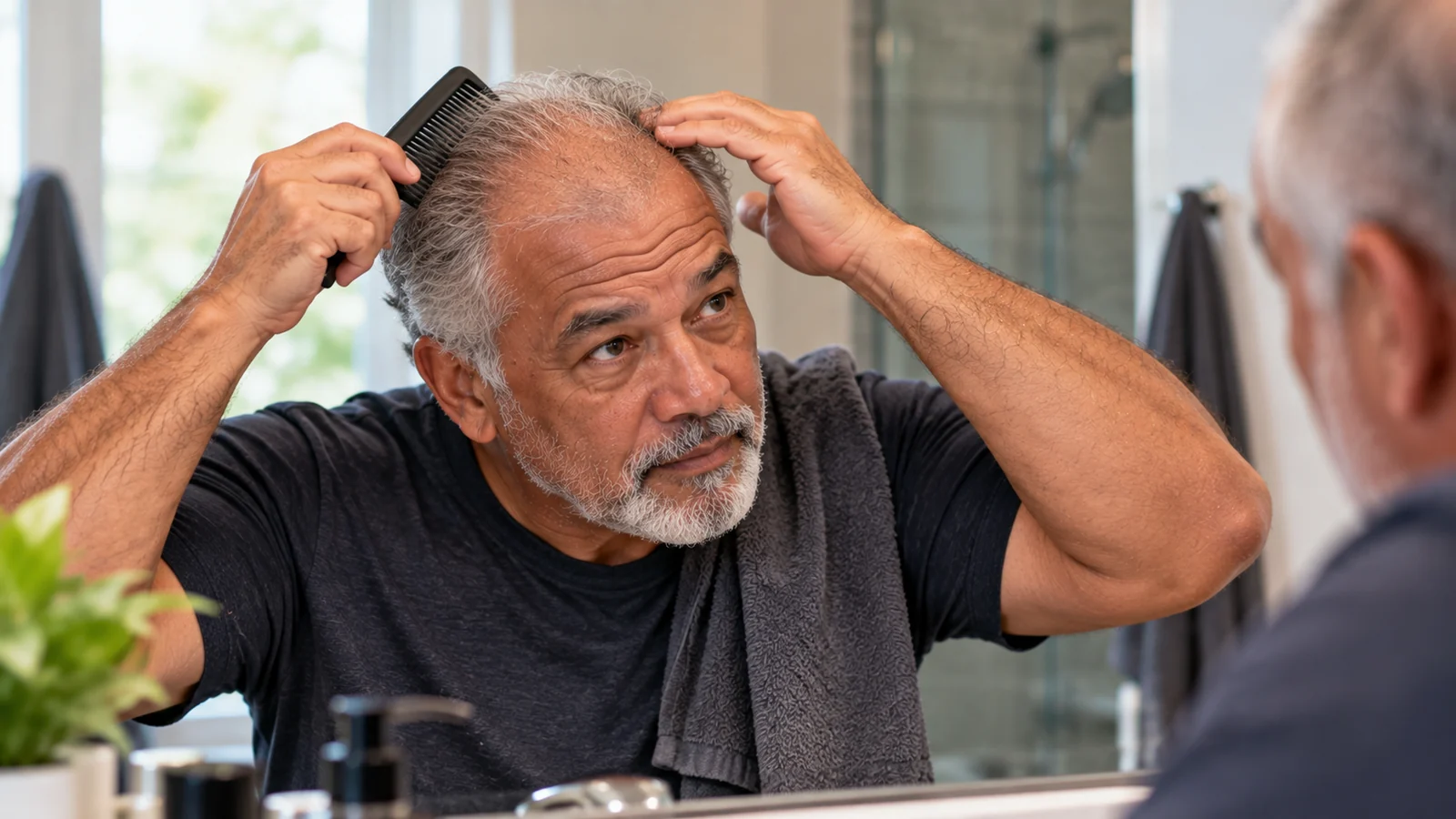
Start with clean, towel-dried hair. Use a pea-sized amount of product, spread it between your hands and apply lightly. Lift hair into place rather than slicking it flat. Check the result in ordinary daylight, not just a bright bathroom mirror. Add product only if necessary.
What products cannot promise
Styling products can change how hair looks and feels; they do not reliably regrow hair. Avoid claims that an ordinary shampoo, oil or paste reverses age-related thinning. If hair loss is sudden, patchy or accompanied by scalp symptoms, seek professional evaluation.
What we may recommend
American Crew Fiber and got2b Glued are research candidates for different hold preferences. Exact sizes and current listings remain unverified, so this guide does not include purchase buttons yet.
Pick a haircut before picking a product
With diffuse thinning, a shorter cut can make the overall density look more even. With a receding hairline, keeping the sides tidy and avoiding an exaggerated forward sweep often makes daily styling easier. With a thinner crown, assess the look from behind as well as the front; an elaborate arrangement that survives only in the mirror is not practical.
Texture without the helmet
Rub a very small amount of matte styling product between palms until it spreads evenly. Apply from the back toward the front so you do not overload the hairline. Use fingers to lift rather than a fine comb to create hard, separated tracks. If the hair becomes shiny, sticky or clumped, wash out the excess instead of layering more product on top.
What to tell your barber
- Describe where hair is thinner and how much time you will spend styling.
- Ask for a cut that works without concealing every visible patch of scalp.
- Discuss how it looks air-dried, not just immediately after professional styling.
- Ask what can be maintained between appointments with minimal tools.
For the next related decision, see styling product comparisons.
Common questions about thinning hair
Will thicker-looking styling products make hair grow?
No. Cosmetic volume and actual hair growth are different outcomes. Do not interpret a fuller-looking style as evidence of regrowth.
Is a buzz cut the only sensible option?
No. It is one low-maintenance option. A short textured cut or another simple shape may suit your density, head shape and preferences better.
Should I hide a receding hairline?
Only if you want to. A practical cut can look intentional without pretending your hairline is somewhere else.
Related Grey Wolf guides
Explore the men’s grooming ingredient guide and complete beard-care routine for adjacent decisions.