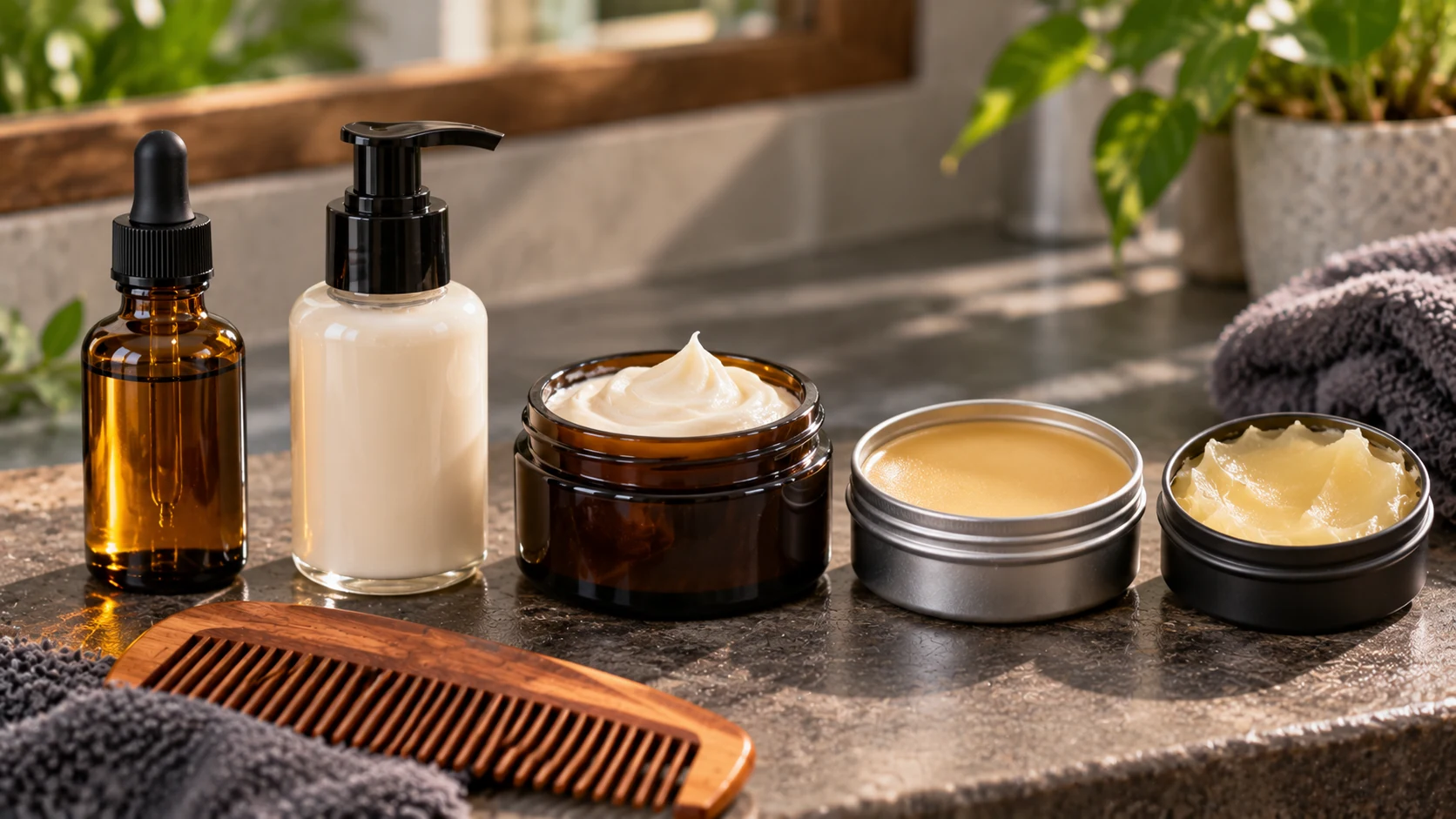
Skip the four-bottle sales pitch
Oil, cream, butter, and balm are not a required four-step ritual. They are overlapping product categories with different degrees of conditioning and hold. For most men, the sensible choice starts with one question: what is the beard doing that you want to change?
The beard aisle makes oil, cream, butter and balm sound like four mandatory steps. They are not. These products overlap, and manufacturers do not use every category name consistently.
The easiest way to choose is to ask two questions: How much conditioning do I want? and How much hold do I need? Start with the lightest product that solves the problem. Add structure only when the beard actually needs it.
For the complete wash-to-finish sequence, start with the Complete Beard Care Routine.
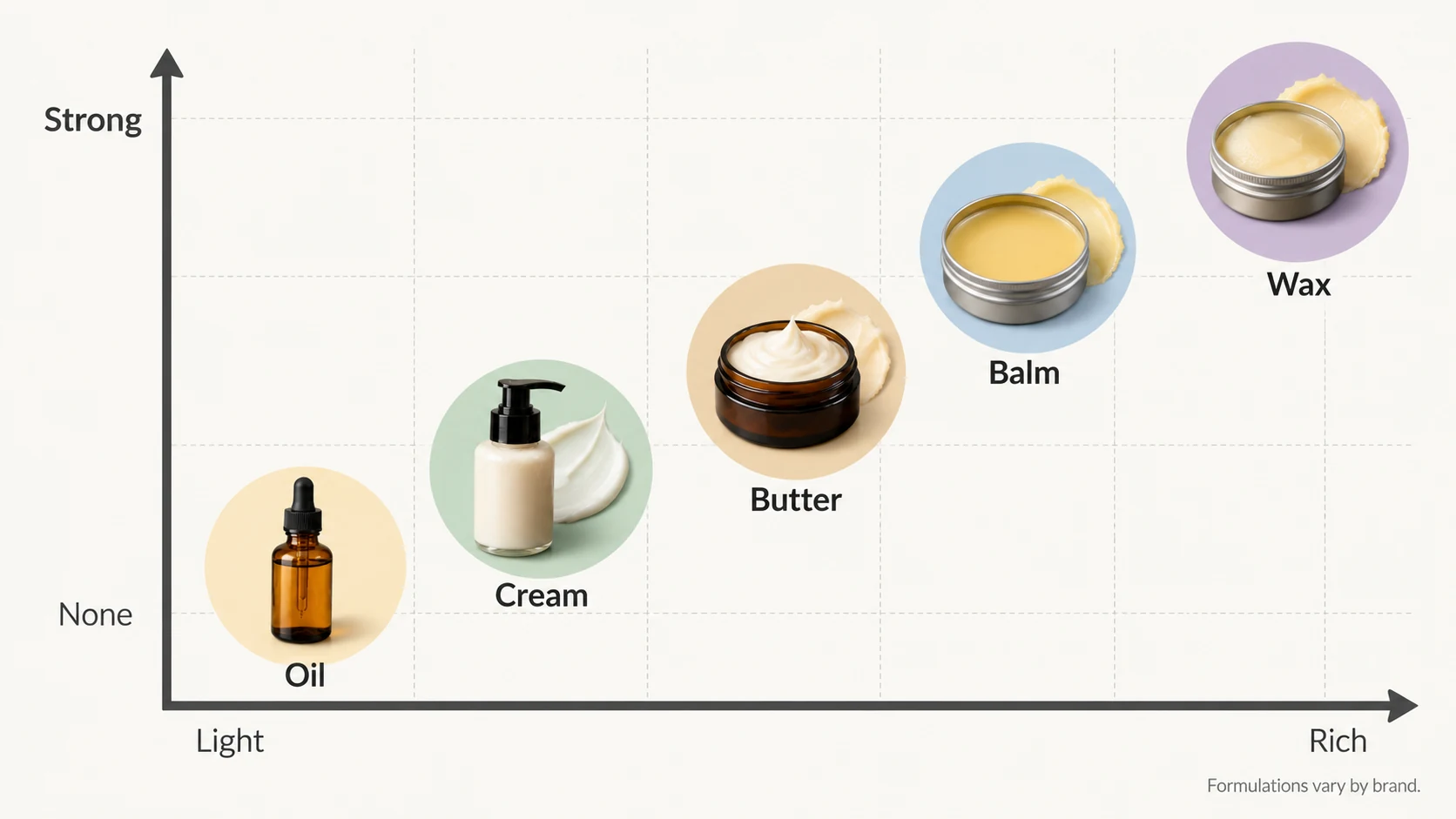
| Product type | Typical job | Typical feel | Typical hold |
|---|---|---|---|
| Oil | Light conditioning for beard hair and skin beneath it | Light | None |
| Cream / leave-in | Softness and manageability | Light–medium | Little or none |
| Butter | Richer conditioning | Medium–rich | Little or none |
| Balm | Conditioning plus shape and flyaway control | Medium | Light–medium |
| Wax | Targeted styling and stronger control | Firm | Strong |
Choose Oil When You Want the Lightest Leave-In Step
Oil makes sense when the main goal is light conditioning without meaningful styling hold. It is especially useful when you do not want the weight of a cream, butter or wax-based balm. See the full beard oil guide for application and product-selection guidance.
Choose Cream or Leave-In Conditioner for Lightweight Softness
“Beard cream” is not a tightly standardized category. In practice, many products in this slot behave like leave-in conditioners: softer and more substantial than oil, but without the wax structure of balm. The dedicated beard cream guide explains leave-in conditioning and formula tradeoffs.
Choose Butter When Richer Softness Matters More Than Hold
Butter generally sits on the richer side of conditioning. Formulas vary, so do not assume every jar is wax-free or fragrance-free just because the label says “butter.” See the beard butter guide for practical use and category tradeoffs.
For greying facial hair, see grey and white beard care.
Choose Balm When the Beard Needs Shape as Well as Conditioning
Balm usually adds wax or another structuring ingredient to oils and butters. That gives it more control than oil, cream or most butters. If flyaways and overall shape are the real problem, see the full beard balm guide.
Choose Wax Only When You Actually Need Strong Hold
Wax is the styling end of the range. Use it when a mustache or specific section of beard needs more control than balm can provide. It should not be treated as another mandatory conditioning layer. See beard wax vs mustache wax for the full comparison.
Quick Decision Rules
- Dry-feeling beard or skin, little need for hold: start with oil.
- Want softness without an oily feel: try a cream or leave-in conditioner.
- Coarse or longer beard that wants richer conditioning: compare butter.
- Beard feels fine but will not hold its shape: move toward balm.
- Mustache or specific hairs need serious control: use wax only where needed.
Condition dry-feeling hair; use hold only when you need hold; choose a lighter formula if residue shows in pale whiskers. If you don’t have a problem to solve, you don’t need another product.
Can You Layer Beard Products?
You can, but layering is optional. A common pattern is a light conditioning product followed by balm when styling is required. Butter can stand alone as a richer conditioning step. Wax belongs last and only where stronger control is needed.
The useful rule is simple: use the fewest products that produce the result you want. Product count is not grooming quality.
Ingredient and Certification Reality Check
“Natural,” “organic ingredients,” “fragrance-free,” “vegan” and “USDA Certified Organic” are different claims. Grey Wolf Grooming should state the exact one that applies rather than treating them as interchangeable.
- Fragrance-free does not mean allergen-free.
- Contains certified-organic ingredients does not mean the finished product is certified organic.
- USDA Certified Organic is a stronger finished-product certification claim when verified.
- Vegan matters separately from organic status; beeswax and lanolin are animal-derived.
- Nut, seed, essential-oil, rosin, beeswax and lanolin exposure should be disclosed when relevant rather than hidden behind “clean” marketing.
Compare products by the job, not the label
You do not need all of these. Use the distinctions above to select the one format that answers your actual grooming need:
Affiliate disclosure: As an Amazon Associate I earn from qualifying purchases. The product links below are affiliate links; you do not pay more for using them.
- Honest Amish PURE Unscented Beard Oil — Oil: a light conditioning option.
- Scotch Porter Restorative Leave-In Beard Conditioner — Leave-in conditioner: a cream-like conditioning alternative.
- Grave Before Shave Beard Butter — Cigar Blend — Butter: a richer beard-conditioning option.
- Badger Organic Beard Balm — Balm: added softness with some shape.
- Death Grip Mustache Wax — Wax: stronger targeted hold, especially for a mustache.