A minute for yourself
You’ve spent enough mornings taking care of everything else. Take a minute for your own face. Beard oil is an optional conditioning product, not a miracle in a bottle. Start small, work it through the whiskers, and check the finish—especially where silver or white hair makes excess product easier to notice.
Beard oil is a lightweight leave-in grooming product. Its practical job is to add emollient conditioning to beard hair and, depending on your skin and the formula, reduce the dry, rough feel of the skin beneath it. It is not a strong styling product and it is not a proven beard-growth treatment.
When to Apply Beard Oil
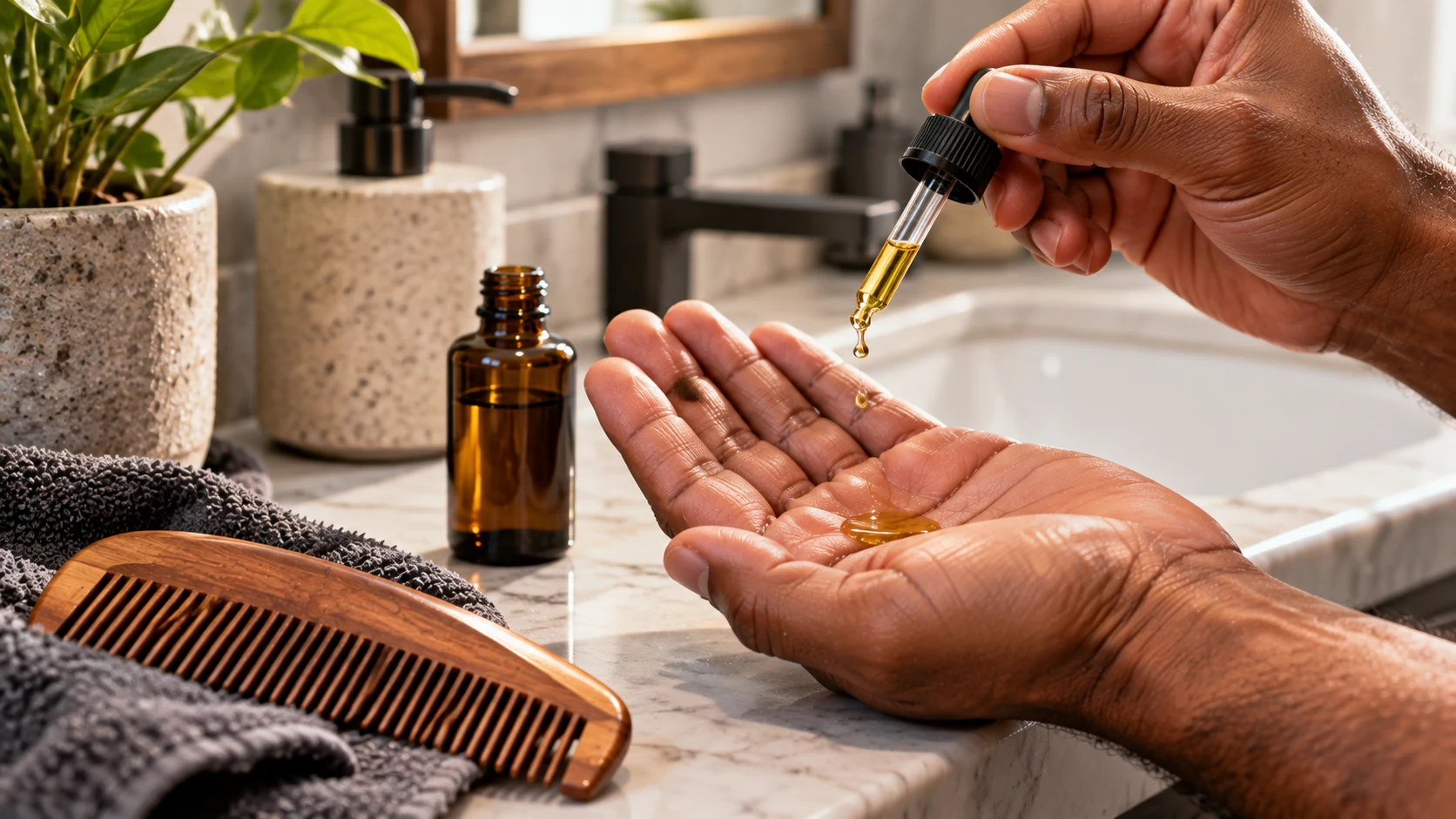
After washing is convenient because the beard is clean and slightly damp. Towel-dry first, put a small amount of oil in your palms, spread it across both hands, then work it through the beard toward the skin. For the washing step, see how to wash and condition a beard.
How Much Beard Oil Should You Use?
Start small. Beard length, density, product viscosity, skin oiliness, and the dropper or pump all change the amount required. Add more only if the first amount cannot distribute through the beard. If your beard still looks wet or greasy well after application, use less next time.
A light application is easier to evaluate than a heavy one. Look for buildup, glossy patches, or a tint that changes the appearance of pale whiskers. A beard oil is not a proven treatment for beard growth or for skin disease.
For related ingredient and appearance choices, see fragrance-sensitive grooming; grey and white beard care.
What Is Actually in Beard Oil?
Most beard oils are blends of cosmetic carrier oils, often including ingredients such as jojoba or argan oil. These oils are used widely as emollient and conditioning ingredients. That is enough reason to discuss them without turning each ingredient into a miracle story.
Fragrance, essential oils, and added scent blends matter because they change the experience and can matter to easily irritated skin. If your skin tends to react, a simpler fragrance-free formula is usually easier to evaluate than a heavily scented one.
Oil vs Balm, Butter, and Cream
Oil gives very little hold. If the beard feels conditioned but will not stay in shape, beard balm may fit better. If richer softness is the goal, beard butter may be worth comparing. The broader decision is covered in beard oil vs balm vs butter vs cream.
Can You Layer Oil With Other Products?
Yes, but layering is optional. If you use oil with a more structured product, apply the lighter oil first and the balm or wax afterward. If one product already leaves the beard comfortable and manageable, stop there.
What Beard Oil Does Not Do
Do not treat cosmetic beard oil as a proven drug for creating new facial-hair growth. A useful beard oil conditions existing hair and skin. That is a legitimate job without adding claims the product cannot support.
Use beard oil when lightweight conditioning fits your beard and skin. Start with less, spread it thoroughly, and judge the result by comfort and appearance. For the complete sequence around it, use the complete beard care routine.
Two beard oils to compare
These are examples to compare by ingredient list, fragrance preference, and how light or rich you want the finish:
Affiliate disclosure: As an Amazon Associate I earn from qualifying purchases. The product links below are affiliate links; you do not pay more for using them.
- Honest Amish PURE Unscented Beard Oil — An unscented beard oil.
- Badger Organic Beard Oil — A second beard-oil formula for comparison.