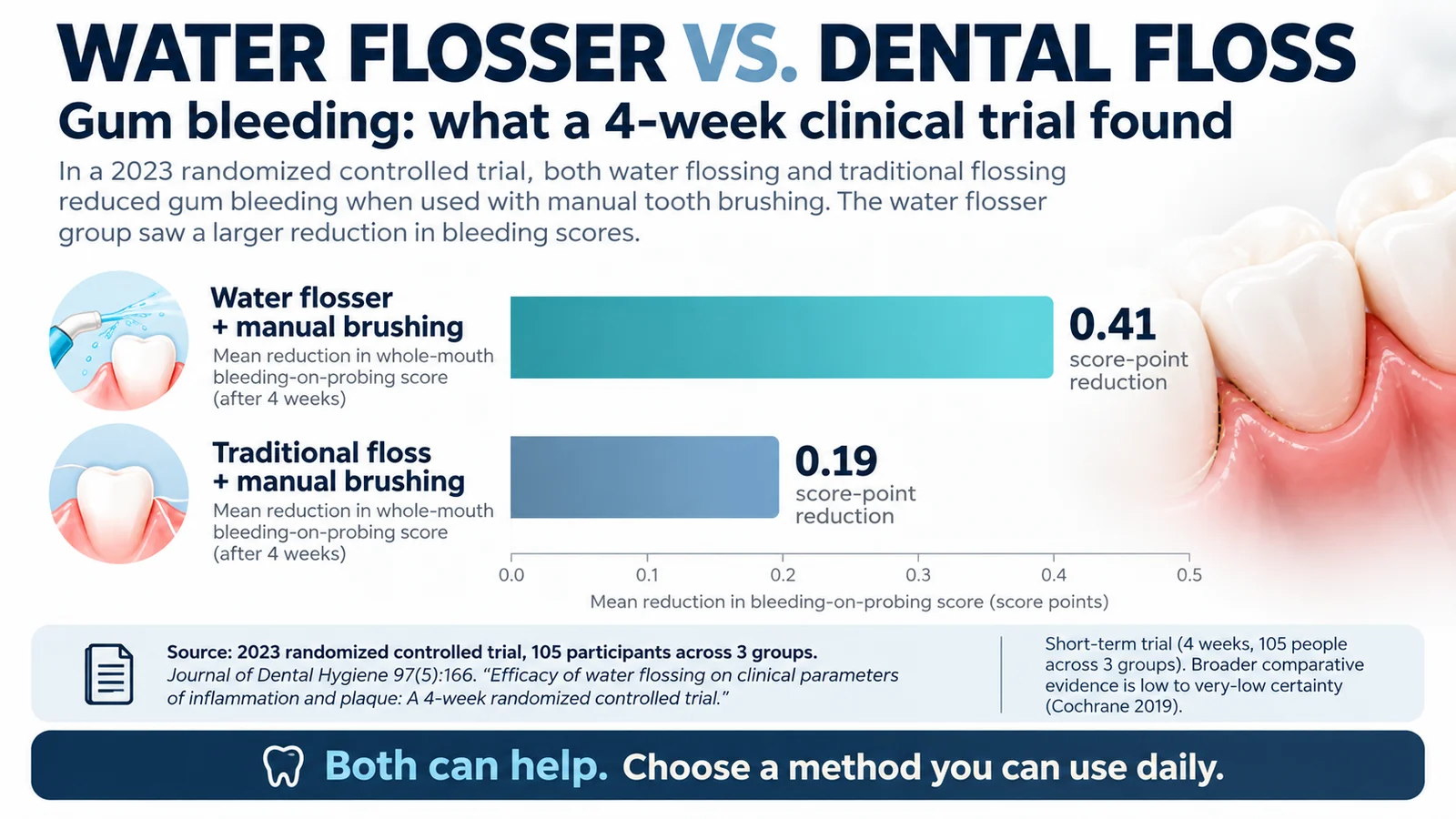
Floss or Water Flosser? Pick a Routine
Cleaning between teeth complements brushing. String floss is inexpensive and portable but takes practice; use it gently instead of snapping it against gums.
Clean between teeth consistently
Cleaning between teeth complements brushing. String floss is inexpensive and portable but takes practice; use it gently instead of snapping it against gums.
What to do in practice
Water flossers use a stream of water and can be convenient around some braces, bridges or dexterity challenges. They need cleaning, space and replacement tips.
Choosing products without the hype
Interdental brushes can suit larger gaps when appropriately sized; never force one between teeth. A dental professional can advise on the method best suited to your mouth.
When to stop and get help
Consistent use matters more than owning multiple devices. Persistent pain or bleeding should be assessed rather than met with harder scrubbing.
What floss does well
String floss can reach tight contacts with minimal equipment. Work it gently between teeth, curve it around the side of each tooth and avoid snapping into the gum. Waxed and unwaxed options largely come down to comfort and fit. If it repeatedly shreds or catches, ask your dentist about the contact or restoration.
Where a water flosser fits
A water flosser directs a stream around the gumline and between teeth. Some people find it easier around braces or bridges, or when manual dexterity makes string floss difficult. It requires a reservoir, counter space, cleaning and replacement tips. It is not a substitute for brushing.
Interdental brushes are another option
Small brushes can be helpful where gaps are large enough, but a too-large brush can injure gums. A hygienist can show you which sizes fit. Different spaces in the same mouth may call for different tools. Do not force equipment to match a product claim.
The practical decision
Choose a method you will use daily and can use comfortably. If you have implants, orthodontic appliances, periodontal concerns or complex dental work, ask for individualized guidance. Persistent bleeding, pain or swelling deserves assessment rather than harder cleaning.
Frequently asked questions
Can I force an interdental brush into a tight gap?
No. Ask a hygienist to help choose the appropriate size.