Toothpaste and Mouthwash: Ingredients Before Hype
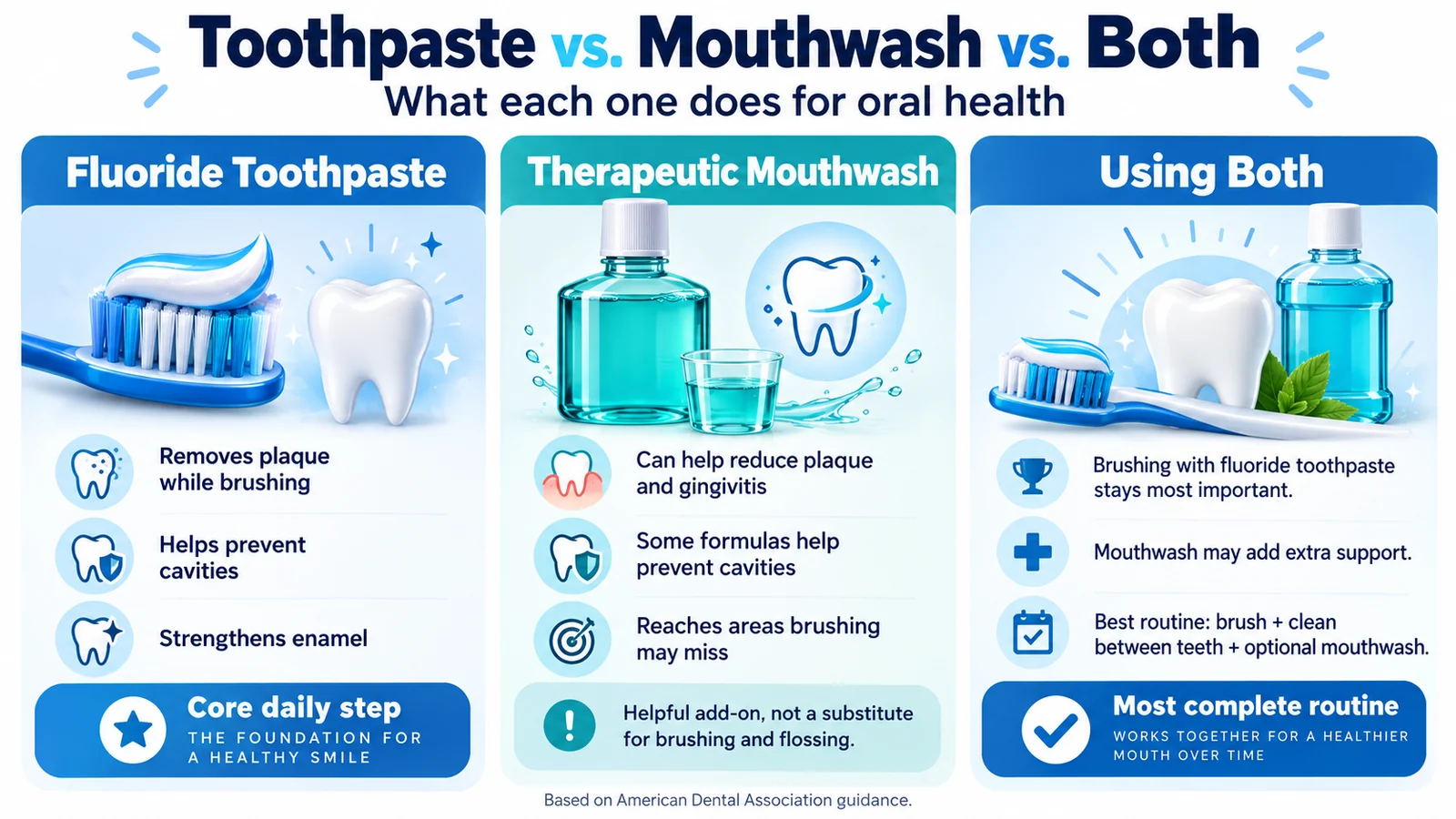
Fluoride toothpaste is a sound everyday foundation for most adults. Compare active ingredients and claims rather than color, packaging or dramatic flavor.
Choose by ingredients and purpose
Fluoride toothpaste is a sound everyday foundation for most adults. Compare active ingredients and claims rather than color, packaging or dramatic flavor.
What to do in practice
Sensitivity toothpaste may help some symptoms, but persistent localized pain or sensitivity needs dental evaluation. Whitening claims vary; avoid abrasive DIY methods.
Choosing products without the hype
Mouthwashes may target breath, fluoride delivery or other specific needs. Read active ingredients, directions and warnings; prescription rinses should be used as directed.
When to stop and get help
Mouthwash is not a substitute for brushing or cleaning between teeth. A burning sensation is not proof that a rinse is more effective.
Start with active ingredients
For most adults, fluoride toothpaste is an established starting point. Check the label for intended use and any dental-professional recommendations. Marketing terms like extreme, charcoal, detox or professional do not automatically mean a product performs better.
Sensitivity and whitening are different questions
Sensitivity toothpaste may help certain types of discomfort, but pain in one tooth, persistent sensitivity or a cracked tooth concern should be evaluated. Whitening toothpaste commonly targets surface stains. Avoid abrasive DIY scrubs or excessive brushing to chase a brighter shade.
Understand what a rinse promises
Cosmetic mouthwash can freshen breath; fluoride rinse may serve a cavity-prevention role; other therapeutic rinses have specific uses and instructions. Check whether a product is intended for daily or limited use. Alcohol-containing rinses can feel drying or irritating for some people.
The simple purchase rule
Choose fluoride toothpaste you will use twice daily, then consider mouthwash only for a defined purpose. A rinse cannot replace brushing and between-teeth cleaning. If bad breath, bleeding or sores persist, see a dentist rather than repeatedly changing flavors.
Frequently asked questions
Does burning mouthwash mean it works better?
No. Burning is not a measure of effectiveness.